Start with the result you need.
An AI system may search records, call a model, check an answer and try again before someone can use the result. Each step takes time or money. Human review can be a substantial part of the total.
A cheaper model call does not necessarily produce cheaper work. If it needs more attempts or correction, the apparent saving can disappear. Equally, a more capable model may add little to a routine task.
Select for the role.
We compare open-weight models and managed offerings against retained tasks. Implementation, review and orchestration need different evidence: working behaviour, missed defects, false alarms and successful coordination.
Our research environment records configurations, usage and outcomes so we can revisit a decision as models and requirements change. The dated research snapshot shows the volume and composition of that activity.
Compare complete paths.
Define what counts as a successful task, then compare approaches against the same examples. Include source preparation, retrieval, tool calls, retries and review. Record failures as well as completed work.
The answer may be a different model, better source material, a deterministic check or a route that reserves more expensive processing for difficult cases. Testing helps identify which change earns its cost.
Keep the comparison tied to the task.
Cost, accuracy and response time need to be assessed together. A configuration that works for extracting fields from documents may be a poor fit for a complex planning task.
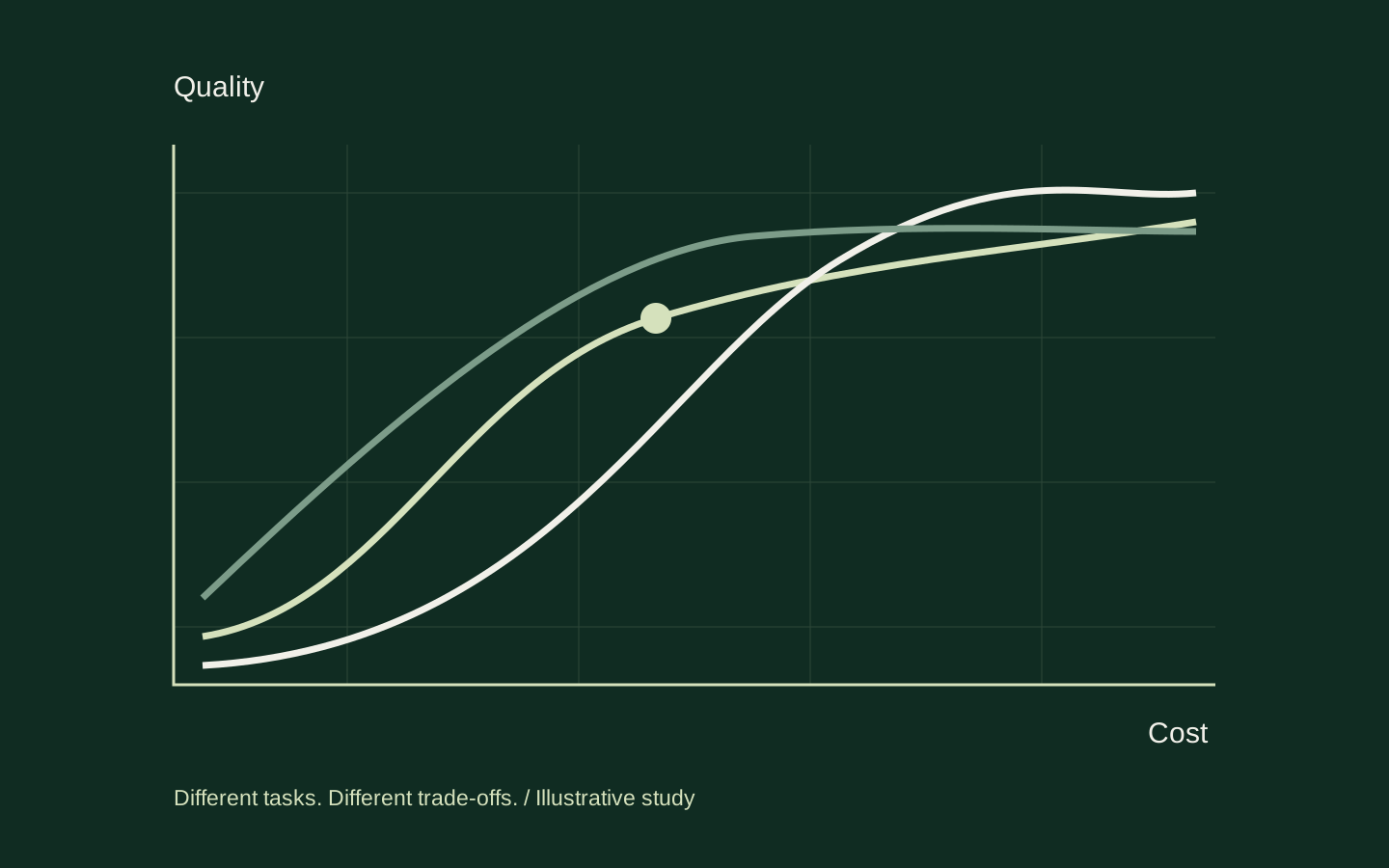
Our cost and quality experiment lets you explore that trade-off with synthetic values. It illustrates how to choose between approaches; it is not a provider benchmark.