A structure you can change.
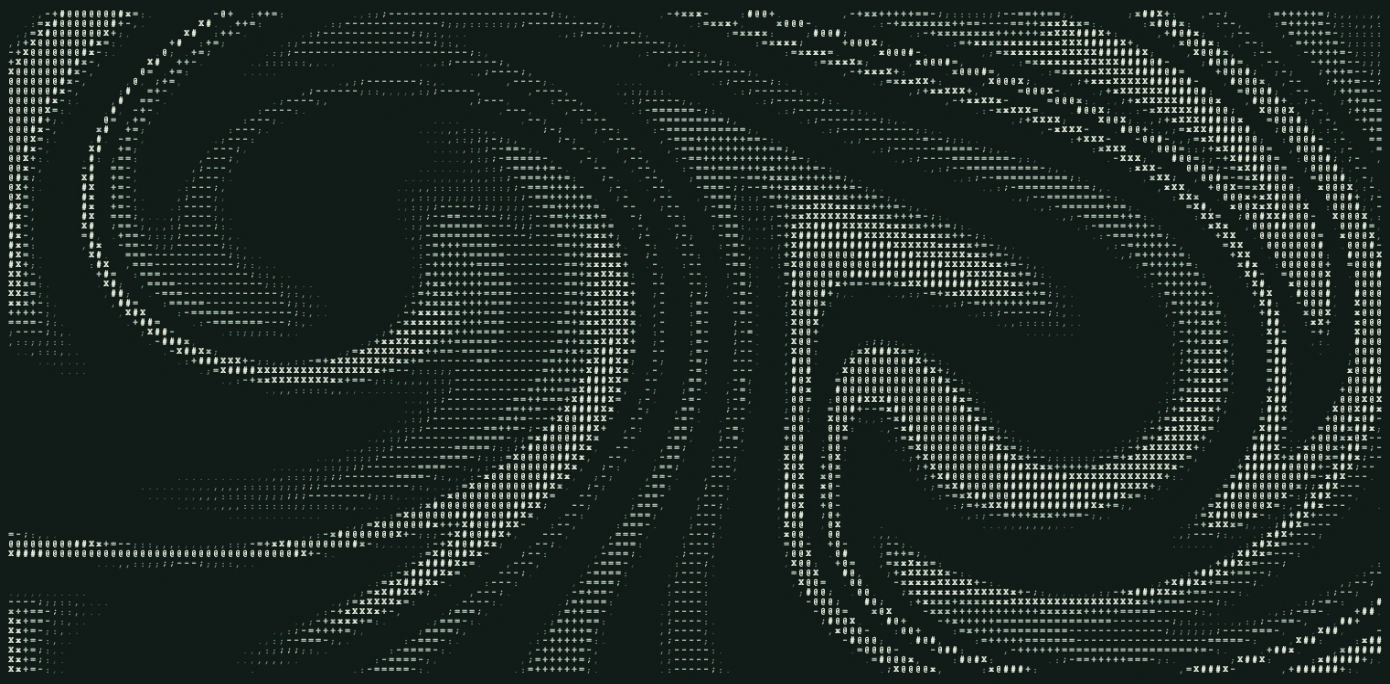
The field opens in motion: curling streams of characters, dense in some places and open in others. Scrolling brings the folded name into focus through the original flowing field. Move your pointer to roll a wake into the current, click to send a ripple through it, or hold to sustain a curl. Even when the name settles, the background keeps moving. The field studio lets you compare the original swirl, cellular contours and alternative transitions.
On a keyboard, focus the field and use the arrow keys to stir. Space adds a ripple. A tap disturbs the field on touch screens; vertical gestures continue scrolling the page.
Two systems, one surface.
The cellular substrate uses the same Gray–Scott reaction–diffusion parameters as the earlier contour study. A separate velocity field transports the character density, with pressure projection and vorticity confinement giving disturbances their curling motion. ASCII glyphs represent the changing density. Broad, authored currents establish the opening and continue moving quietly behind the final name.
The final lettering samples the continuous-compression sculpture: broad highlights, dark creases and folded surfaces become different densities of characters. Scrolling brings the folded sculpture into focus, with the form complete before the section releases. Pointer disturbances ripple and curl its surface, then subside. The words are art-directed; the fluid supplies the motion.
The numerical ideas draw on Jos Stam’s work on stable fluids and Karl Sims’s reaction–diffusion tutorial. This is a browser-based visual experiment, not a physical engineering model.